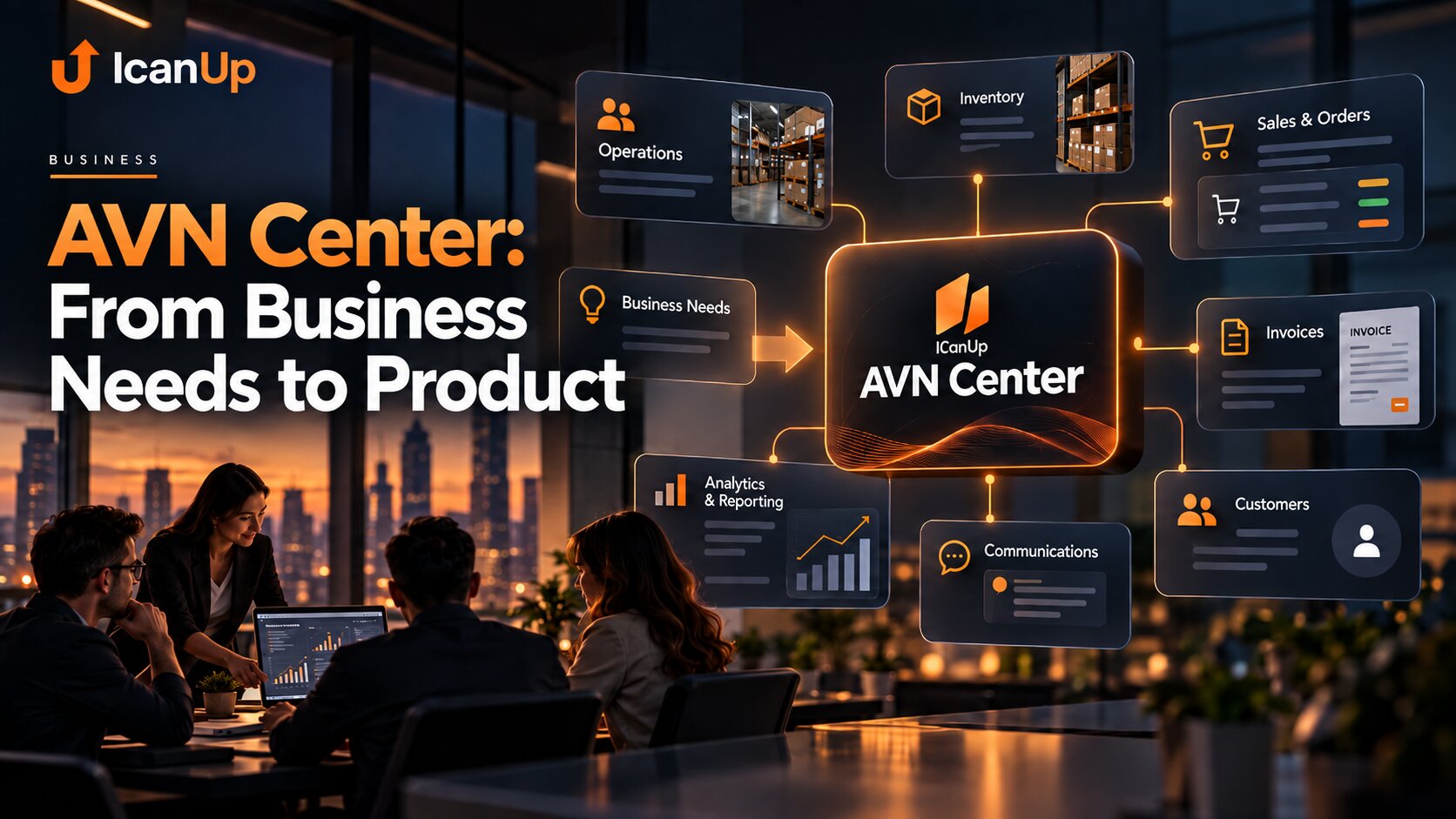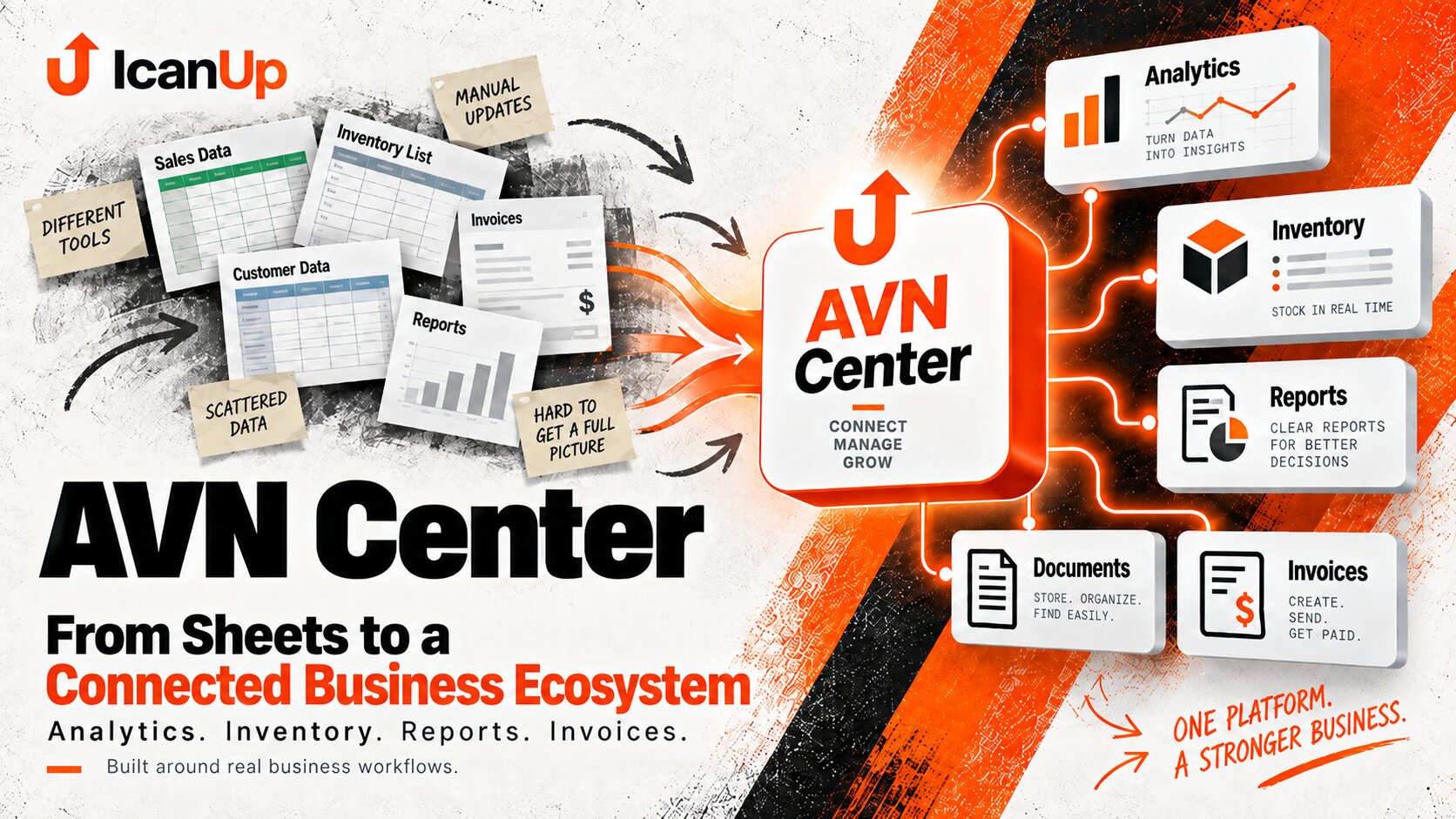
AVN Center reflects a broader approach to business software: understand how a company actually works, preserve useful workflows, and build the analytics, inventory, documents, reporting, and automation it really needs.
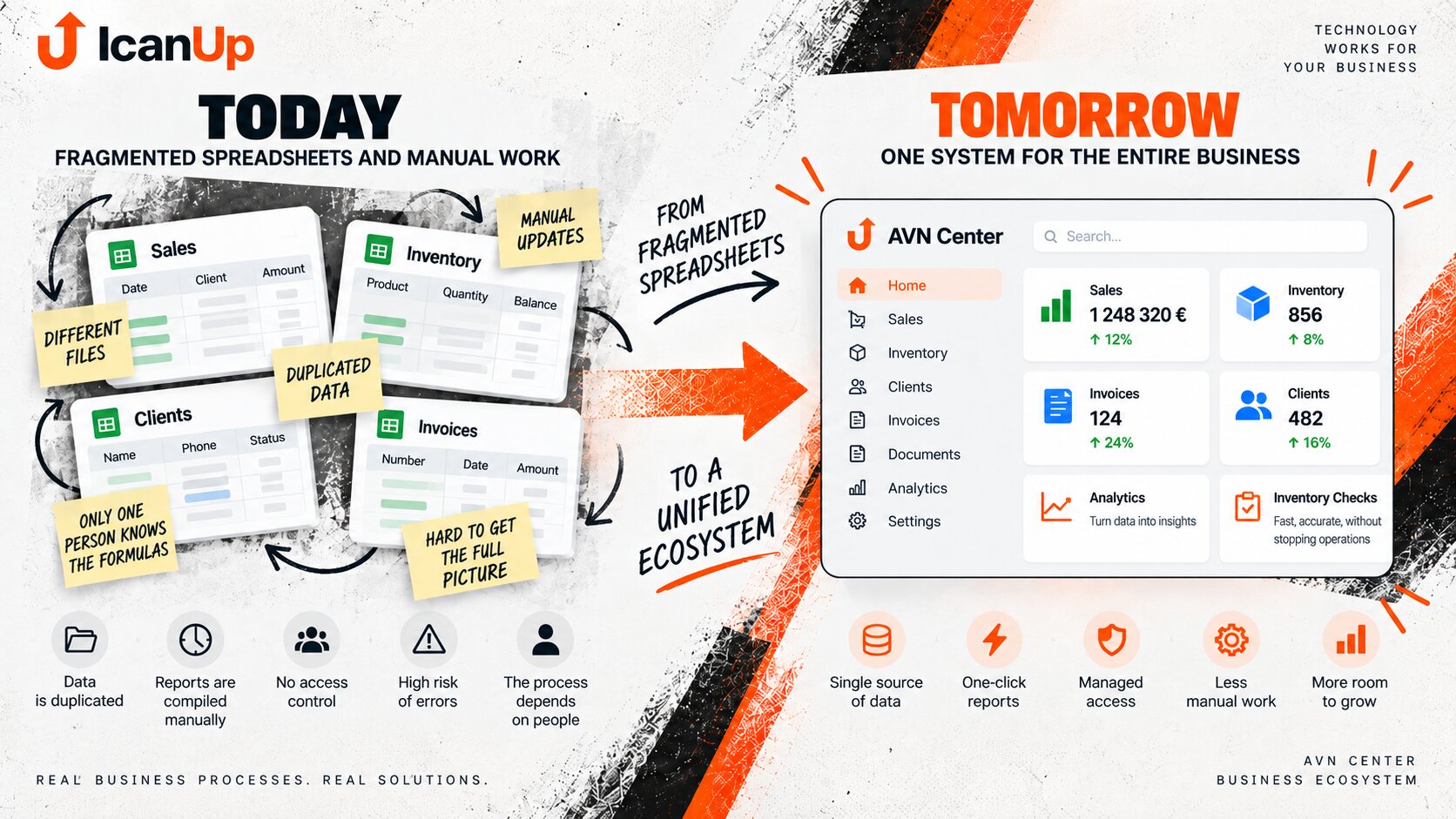
Spreadsheets often become a companys first real operating system. This article explains why teams rely on them, where they start to limit growth, and what a better business system should preserve instead of discarding.
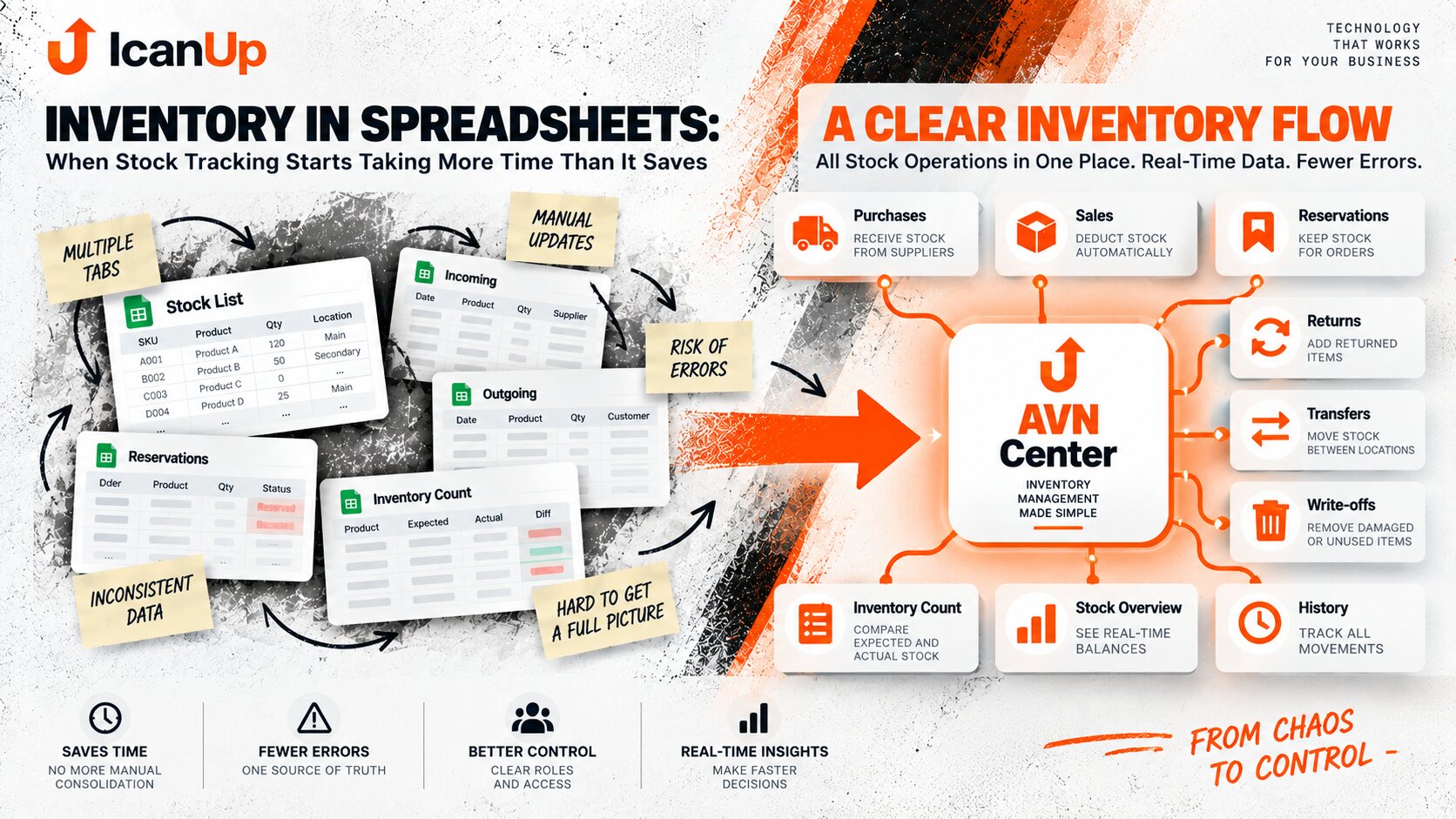
A spreadsheet can work well for simple stock tracking. But receipts, shipments, reservations, returns, multiple locations, and inventory counts can gradually turn one balance column into a complex operational process.
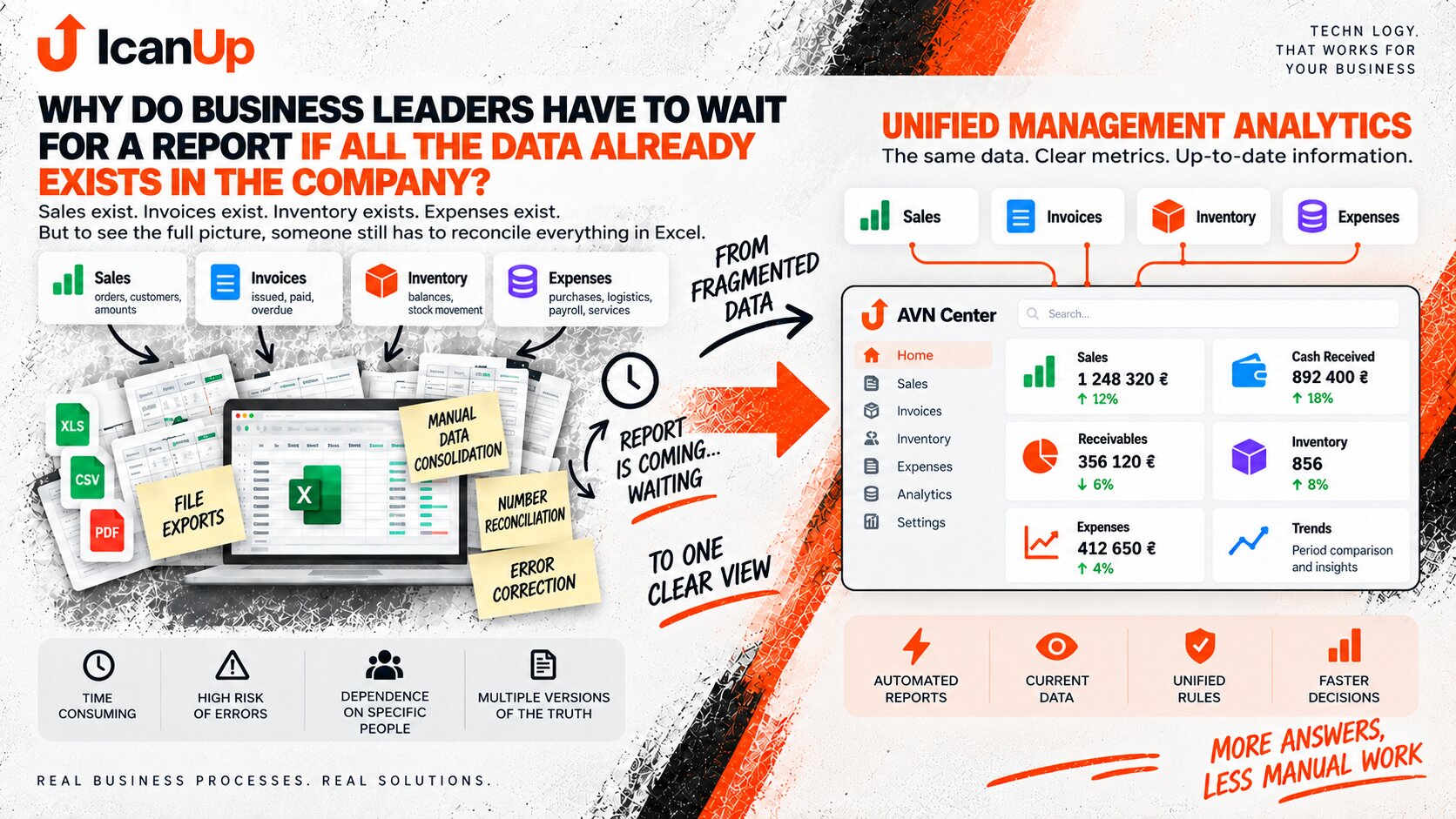
Sales are recorded, invoices exist, stock is tracked, and expenses are already in the business. Yet someone still exports files, reconciles numbers, and manually builds the management report.
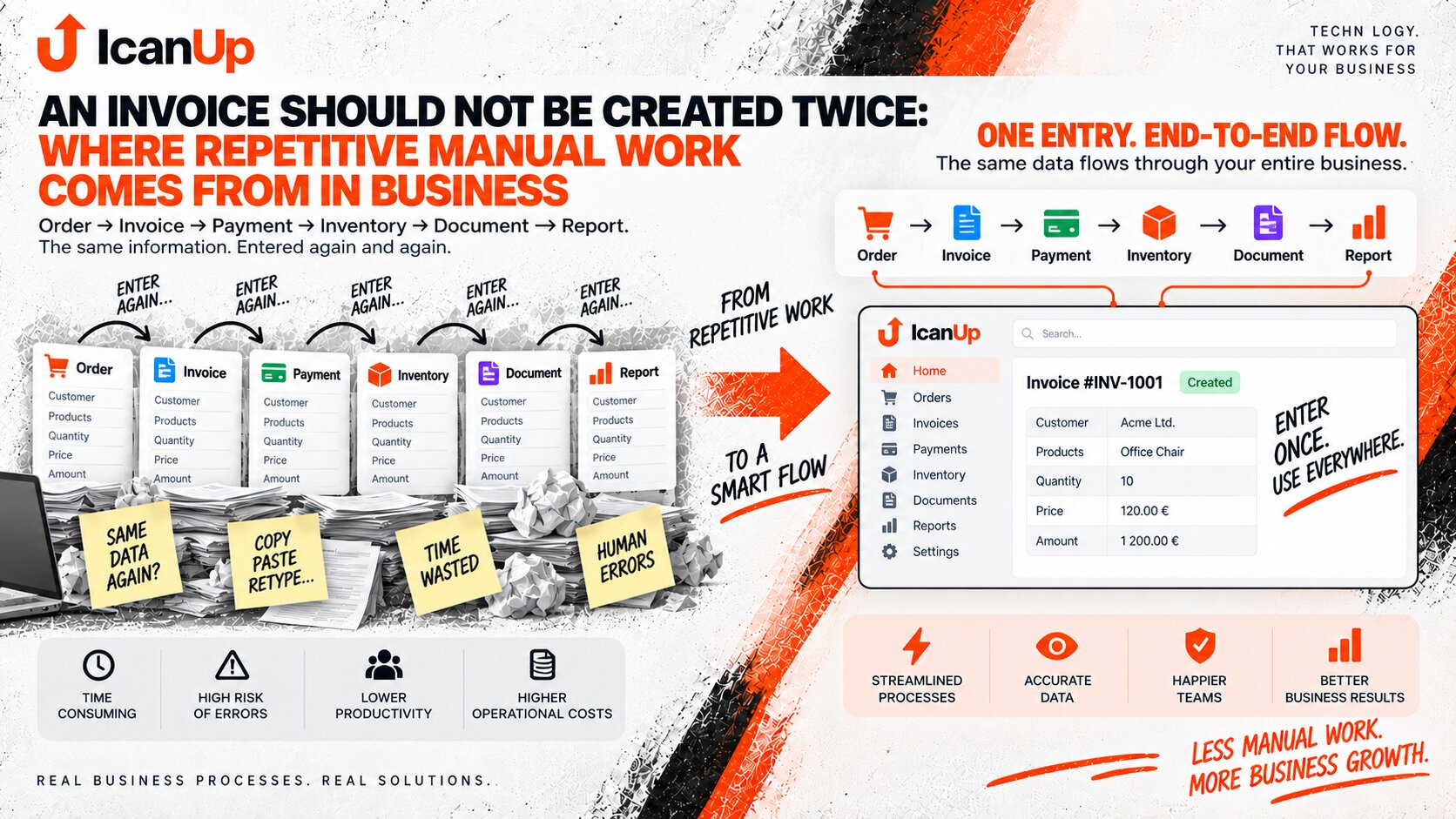
An order already contains the customer, products, quantities, and prices. Why should the same information be typed again into an invoice, payment workflow, inventory document, and report? This article looks at where duplicate work appears and what can be automated without removing human control.
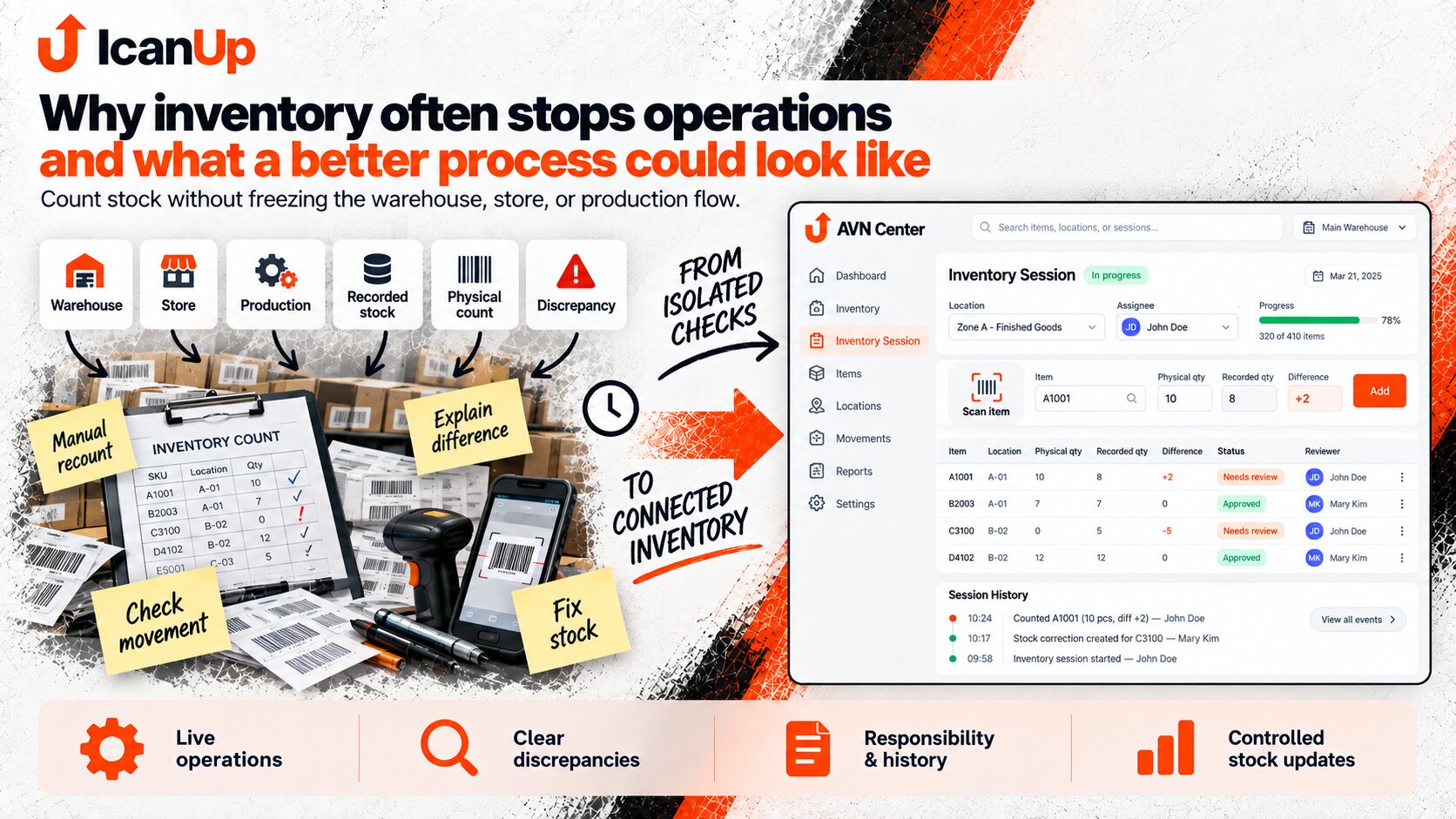
Inventory does not have to stop a warehouse, store, or production process. I explore how a workflow could combine phone or scanner counting, actual quantities, discrepancies, responsibility, history, and controlled stock updates.
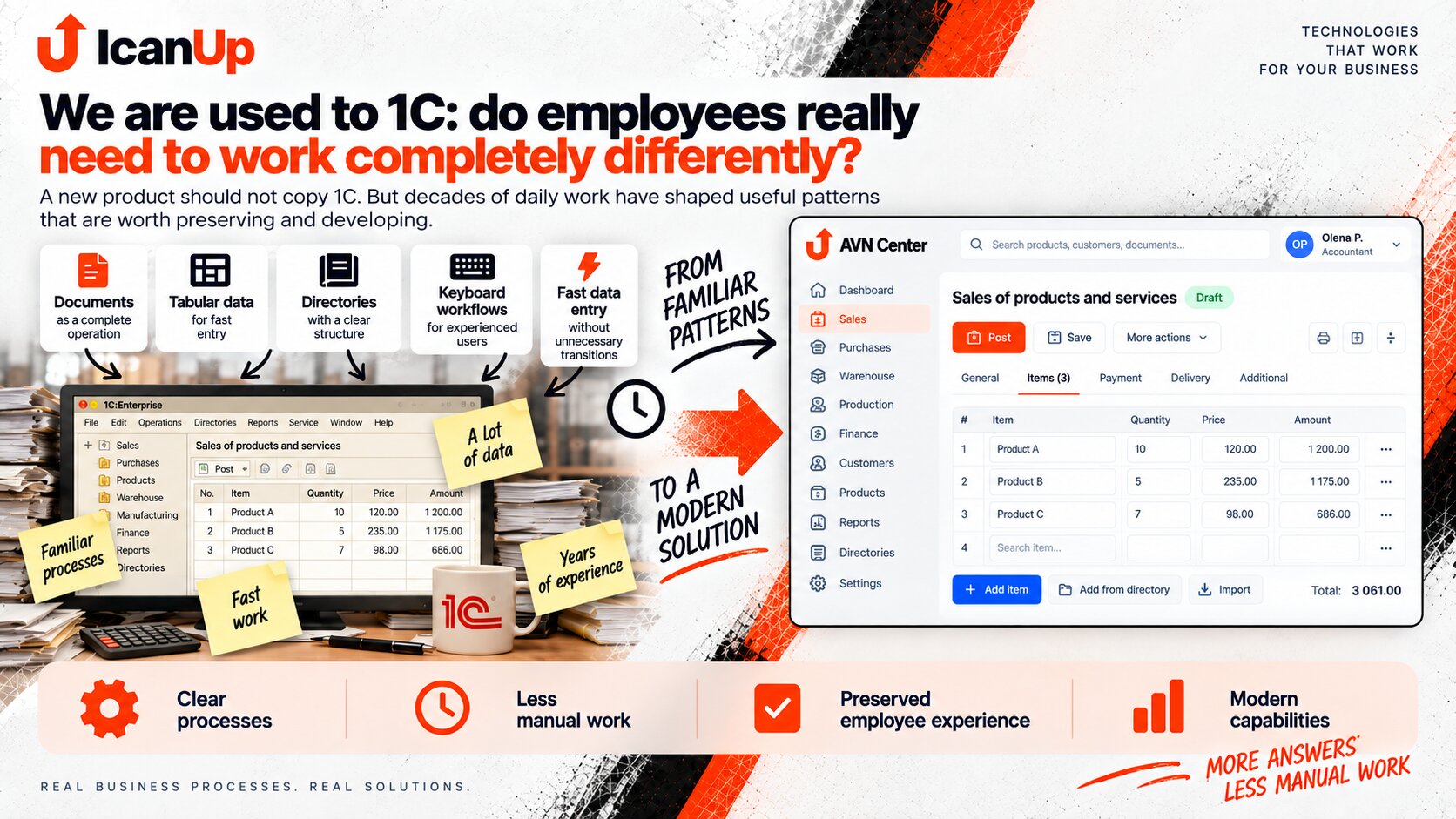
A new product should not copy 1C. But decades of daily work have shaped useful patterns around documents, tabular data, directories, fast entry, and keyboard workflows. I explore what is worth preserving and what should genuinely change.
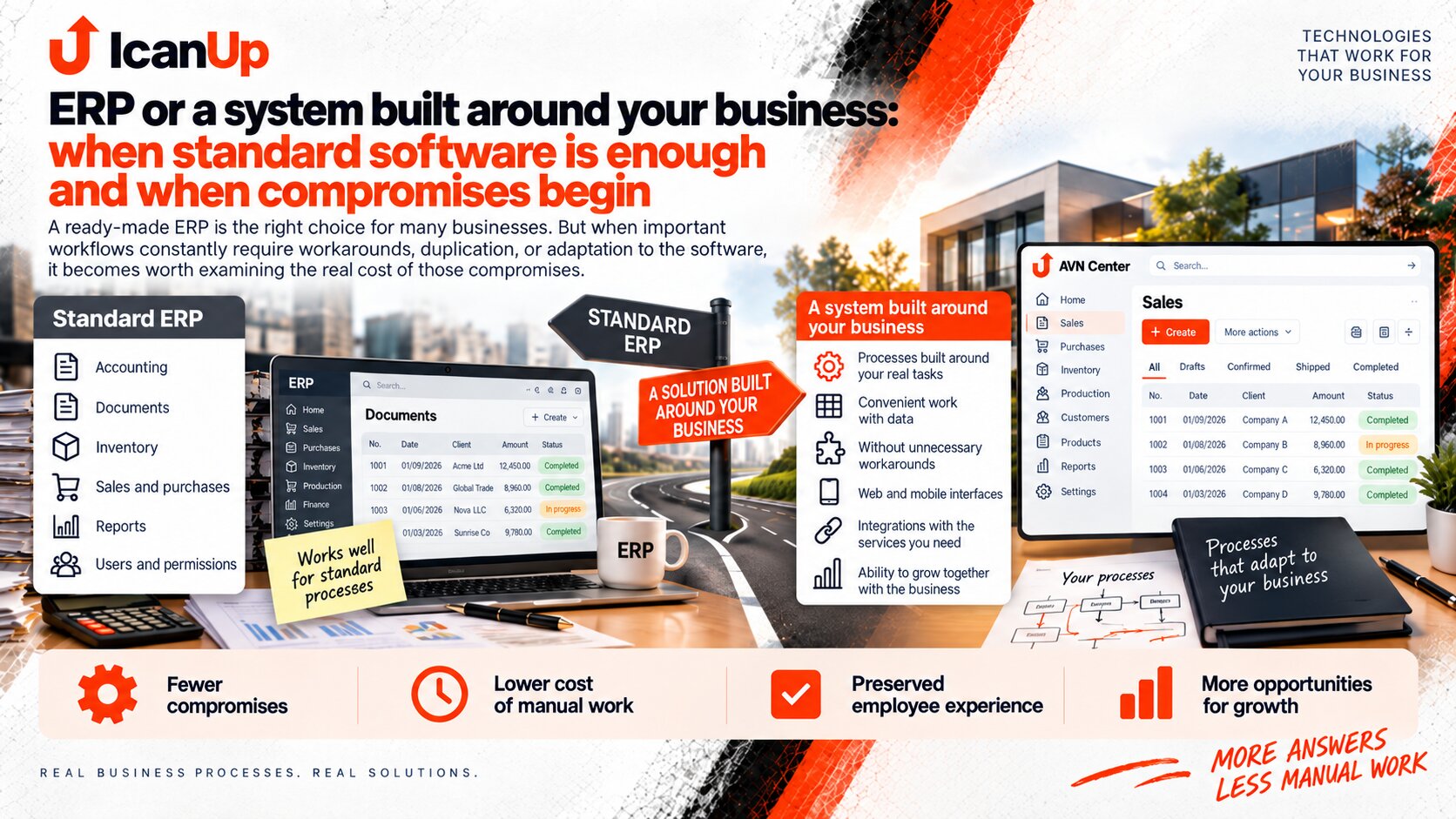
A ready-made ERP is the right choice for many businesses. But when important workflows constantly require workarounds, duplication, or adaptation to the software, it becomes worth examining the real cost of those compromises.
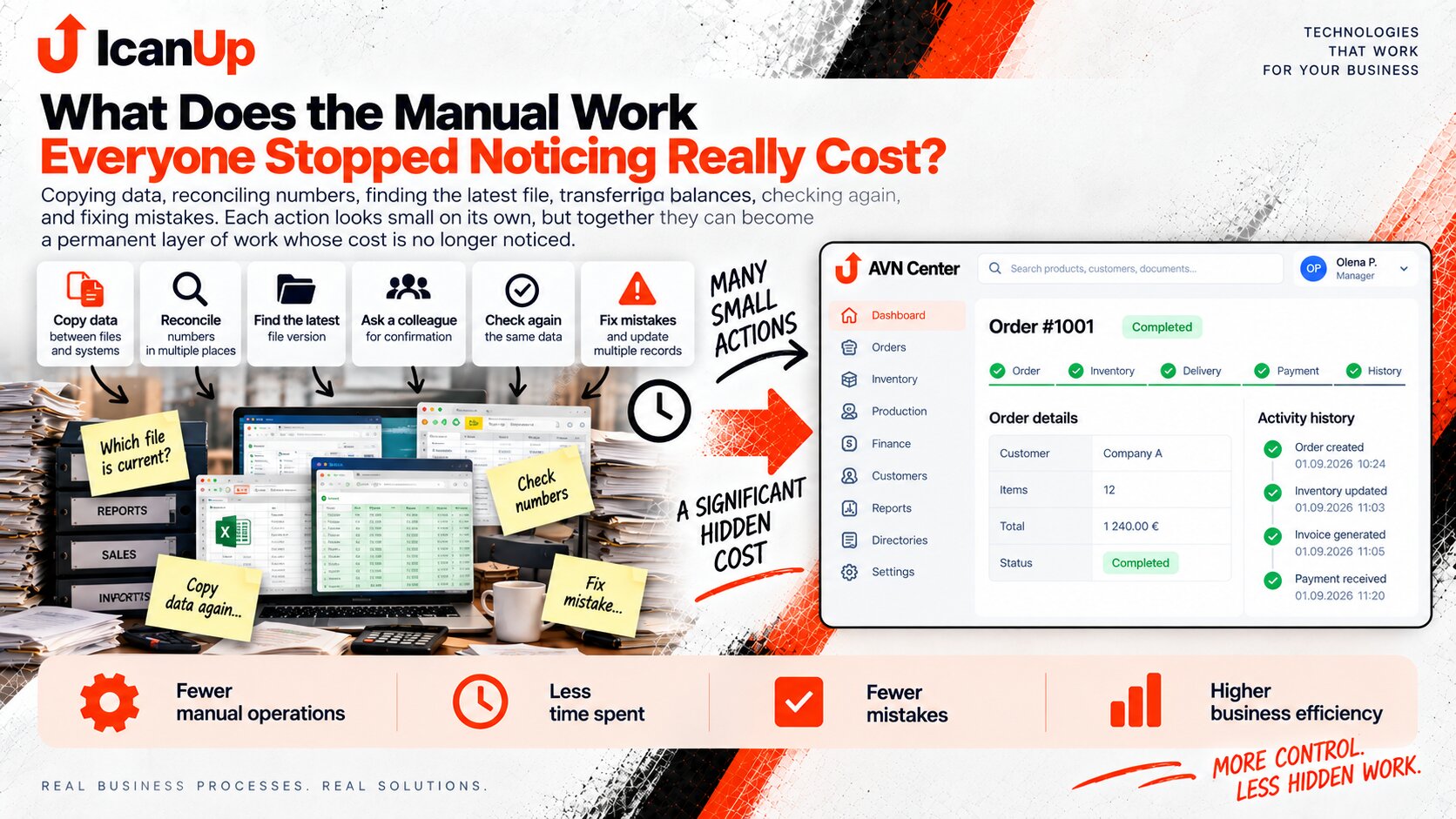
Copying data, reconciling numbers, finding the latest file, transferring balances, checking again, and fixing mistakes. Each action looks small on its own. Together they can become a permanent layer of work whose cost is no longer noticed.
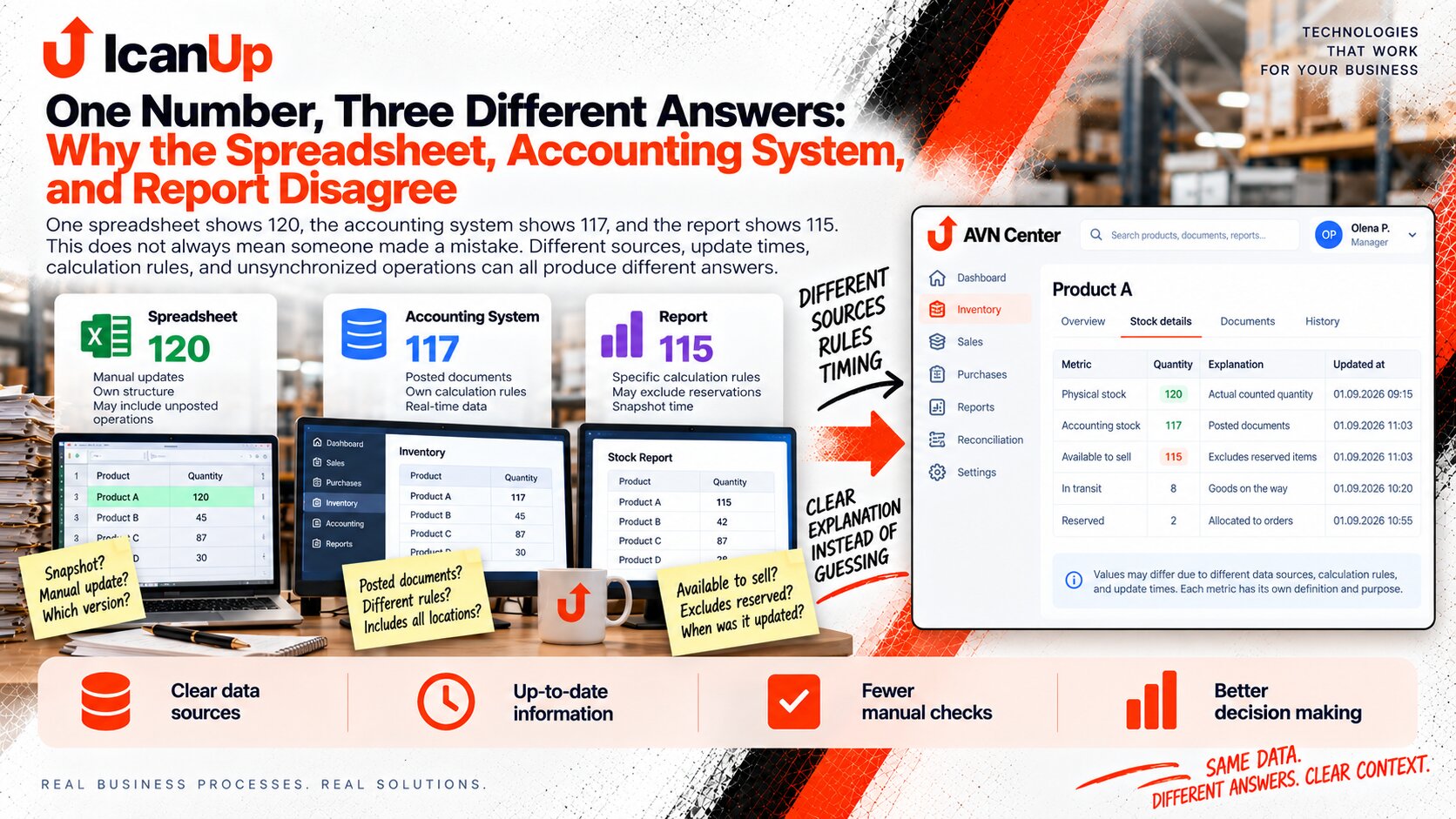
One spreadsheet shows 120, the accounting system shows 117, and the report shows 115. This does not always mean someone made a mistake. Different sources, update times, calculation rules, and unsynchronized operations can all produce different answers.
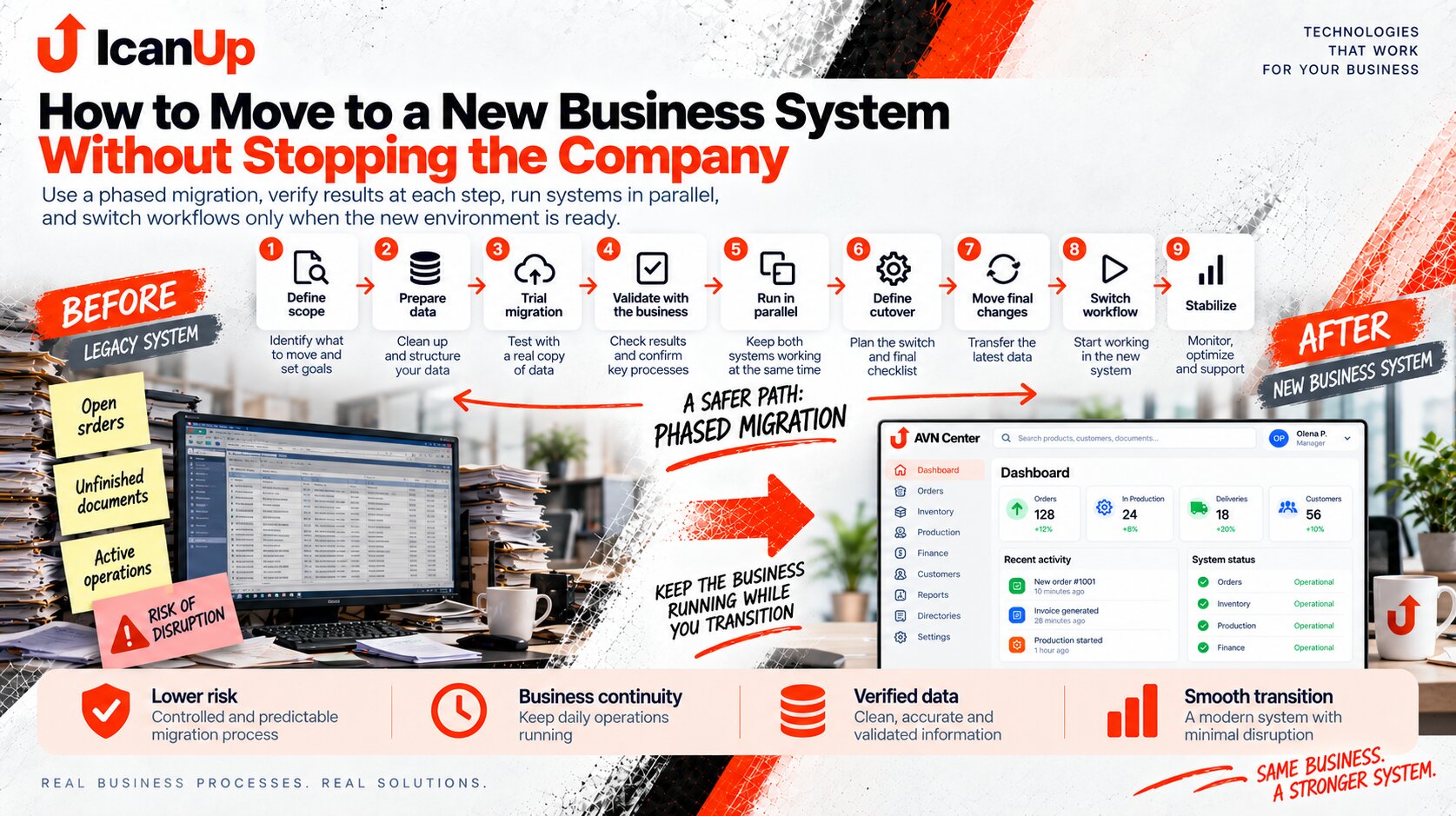
Moving to a new business system does not have to happen overnight. Data can be migrated in stages, results can be verified, systems can run in parallel, and workflows can be switched only when the new environment is ready.
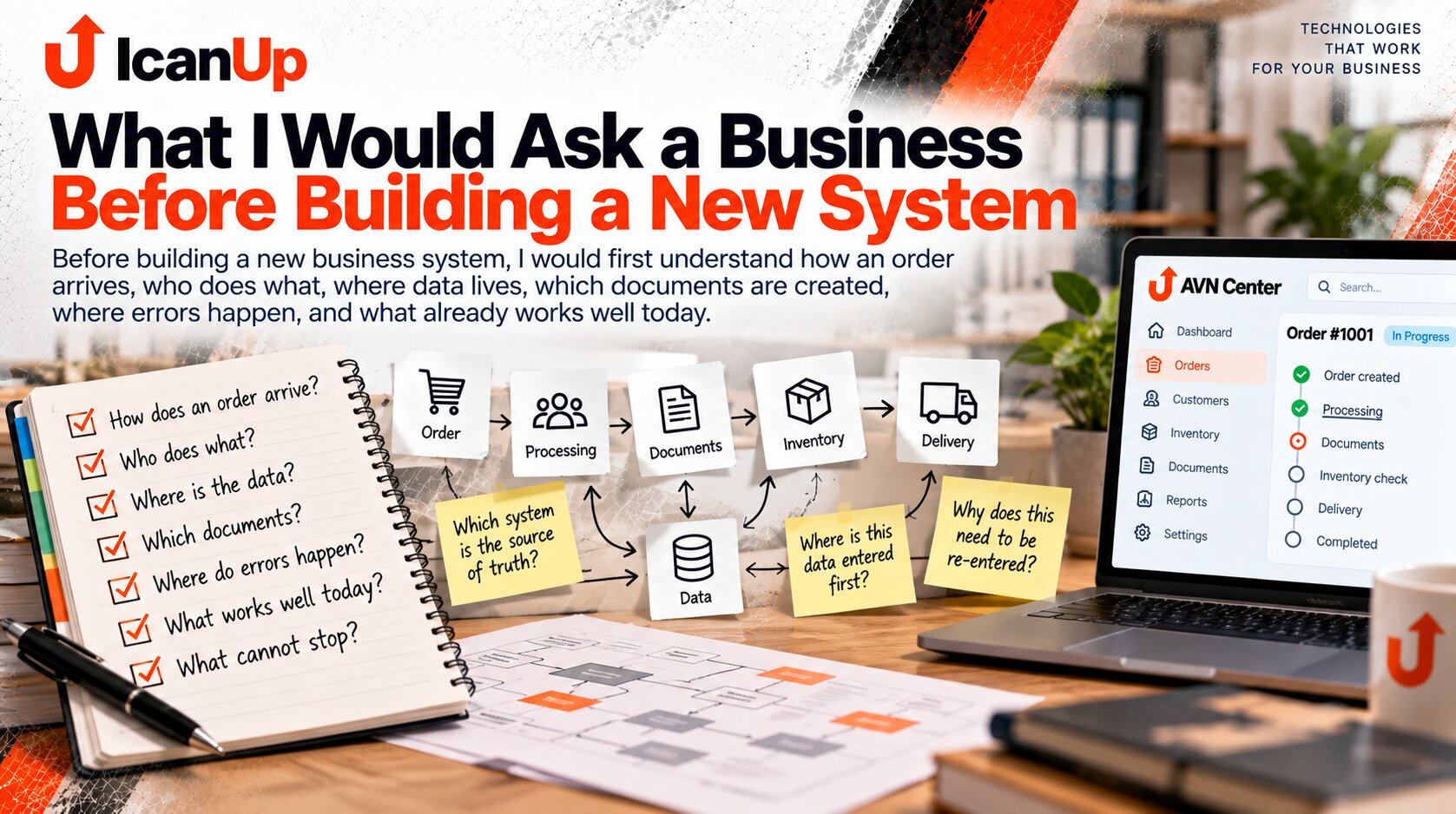
Before building a new business system, I would not start with a feature list. I would first understand how an order arrives, who does what, where data lives, which documents are created, where errors happen, and what already works well today.
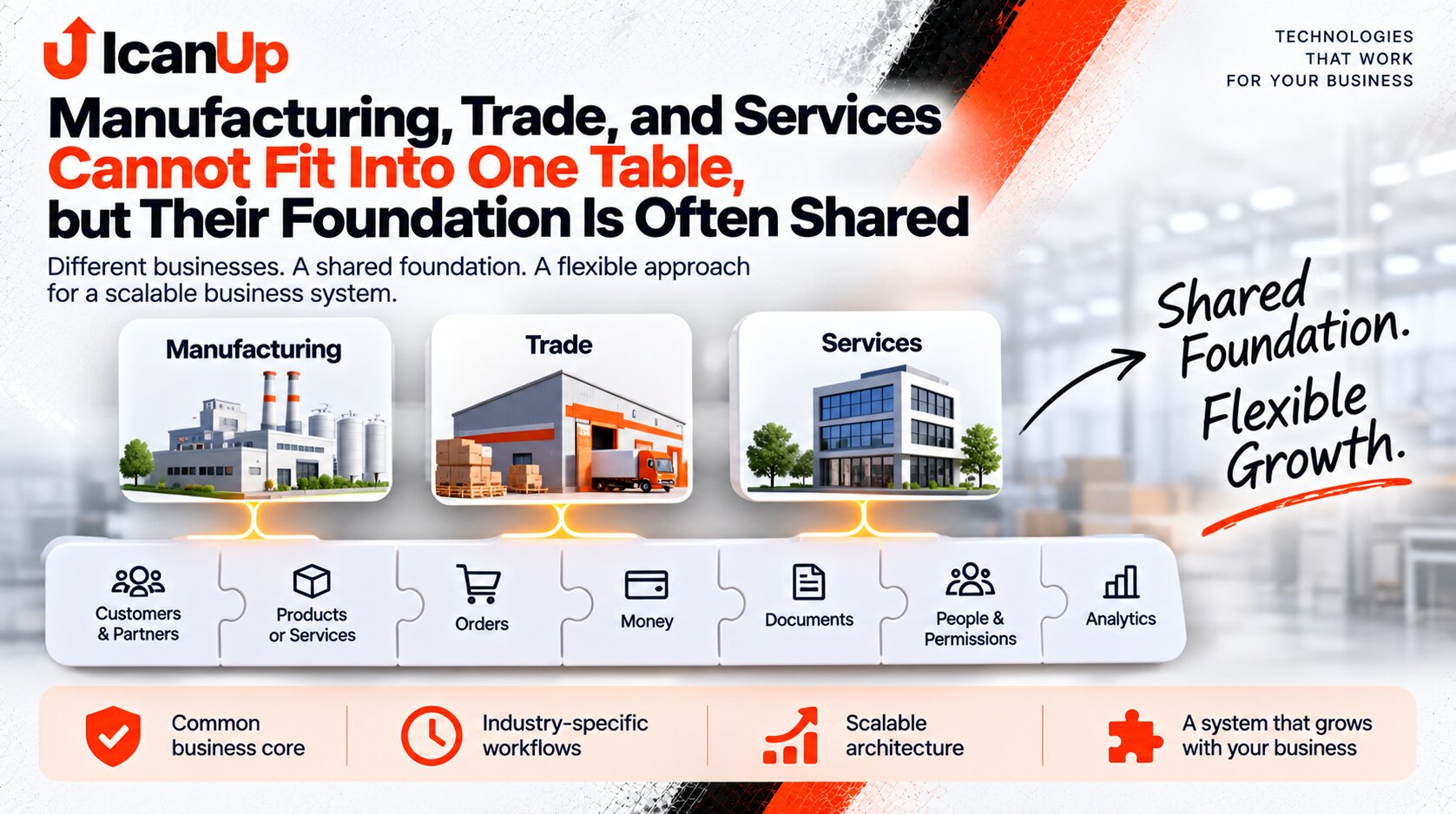
A manufacturer, a retailer, and a service company operate differently. But customers, products or services, orders, money, documents, people, permissions, and analytics often form a shared foundation. The differences begin where domain-specific workflows appear.